Labor’s Long March
The question is no longer whether the working class matters, but how it can fight back.
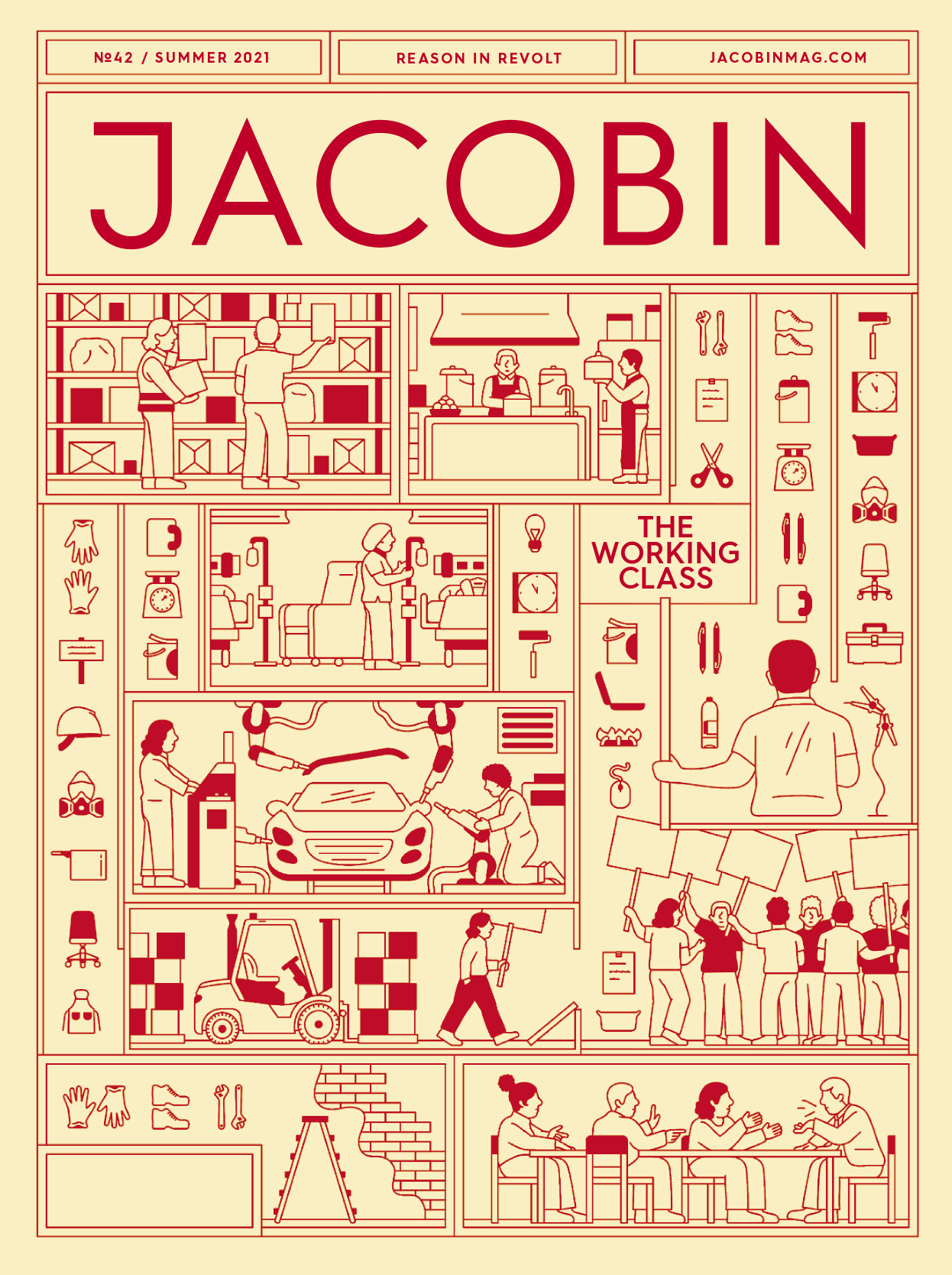
Issue No. 42 | Summer 2021
Our summer edition takes on the challenge of thinking about the big questions of agency in the 21st century.
The question is no longer whether the working class matters, but how it can fight back.
We can only print the letters without expletives.
I started working at Amazon during the pandemic. I wanted to organize my workplace, but at the end of a long day, everyone just wanted to get home as fast as possible.
If an extra $300 a week in unemployment is enough to keep us out of kitchens, it should tell you something about our lives.
While millions of Americans worked remotely during the COVID pandemic, millions more either showed up to a deadly job site or were thrown into unemployment. What will the recovery be like for them?
A coalition of industrial workers and small farmers underpinned democratic politics in the twentieth century. Can workers in a precarious service economy fill their shoes today?
With the rise of industrial capitalism and the workers’ movement it created, we created new words to explain a confounding new world.
What have three decades of market reforms meant for the world’s largest working class?
As his fellow West German radicals began to embrace violence in the 1970s, legendary filmmaker Rainer Werner Fassbinder decided to celebrate another path for emancipation: class struggle in the workplace.
As the Reagan era kicked into overdrive, Americans abandoned earthy and organic home decor to turn their residences into cold, sleek totems to upper-class aspiration.
Pulp’s 1995 hit “Common People” isn’t just a Britpop classic — it’s a more honest and brutal analysis of class than you’ll hear in the media today.
From America’s Kurt Cobain to China’s Lelush, pop stars earn their adoration not only from performing but from refusing to perform.
In the 1970s, sports movies were funny, bitter comedies about working-class jocks taking aim at both the front office and the rich.
And those are exactly the people we need to save the planet.
Under capitalism, prejudice against workers is common. But it only adds insult to a deeper, more profound injury.
The Second Gilded Age is starting to look more and more like the first.
From Berlin to the Ruhr, the organized working class resisted Hitler’s reactionary appeals.
For most of the news media, the life and struggles of the majority class just aren’t newsworthy.
The culture of British trade union militancy in auto plants like Austin Longbridge wasn’t the “natural” result of a Golden Age of capitalism — it came from organizing.
The middle class isn’t going away — and we’re not sure they’ll help us.
Robert Tressell was a great writer whose class position meant he died without knowing the appreciation of his work.
Michael sought to make the world rather than be made by it.
For decades, the parties of labor have been slowly replaced by the parties of the educated. A Left that doesn’t acknowledge this as a problem has already been defeated.