Austerity Is Now the Central Conflict in Brazilian Politics
Lula da Silva beat Flávio Bolsonaro to win a fourth term as Brazil’s president. Political scientist André Singer says the hardest fight is still ahead: Brazil’s bourgeoisie wants harsh austerity, and Lula’s coalition is split over it.
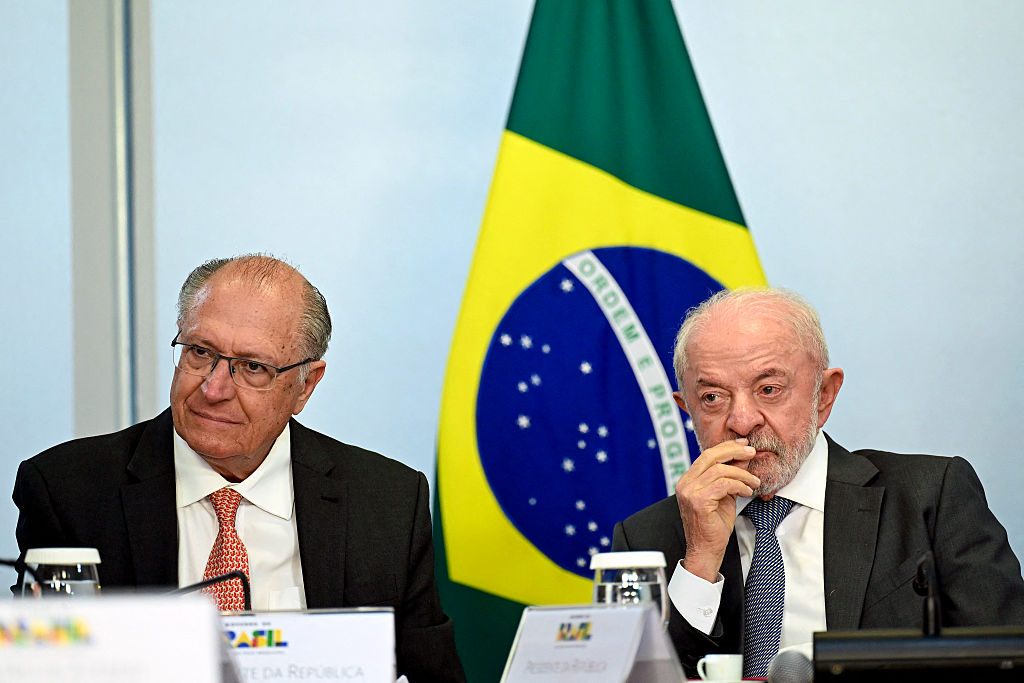
Lula da Silva has won a fourth term, but Brazil’s democratic front is split by two incompatible economic programs. (Evaristo Sa / AFP via Getty Images)
On October 4, Senator Flávio Bolsonaro, the son of former president Jair Bolsonaro, finished the first round of Brazil’s presidential election nearly two points ahead of President Luiz Inácio Lula da Silva. Three weeks later, Lula turned the result around and won a fourth term in the October 25 runoff. In between, left-led demonstrations filled the streets of hundreds of Brazilian cities. The government also banned online betting, backed a forty-hour workweek, and raised the benefit of Bolsa Família, the cash-transfer program for poor families that Lula created in 2003.
Few analysts know Lula’s political project better than André Singer. A professor of political science at the University of São Paulo, Singer served as Lula’s spokesperson from 2003 to 2007 and press secretary from 2005 to 2007. He developed the concept of Lulism in Os sentidos do lulismo (2012) and O lulismo em crise (2018), and his new book, Impasse: O Brasil diante da onda reacionária, came out in August.
After the runoff, Singer spoke with Catarina Príncipe and Aldo Cordeiro Sauda for Jacobin about Bolsonarism as autocracy with a fascist bias, the Brazilian bourgeoisie’s silence during the campaign, and why the second-round mobilization was not populism. He also discussed the fight over austerity that awaits Lula’s fourth term.